What Are Residential Proxies and How Do They Help Find Hidden Prices
· based on the channel Lukas Margerie
Key takeaways
- Residential proxies use real home ISP connections to appear as local users.
- They enable geo-targeted web scraping by rotating IP addresses per request.
- VPNs route traffic through data centers often flagged by websites, unlike residential proxies.
- Residential proxies help uncover hidden or region-specific prices on SaaS platforms.
- Tools like DataImpulse provide reliable residential proxy networks for scraping.
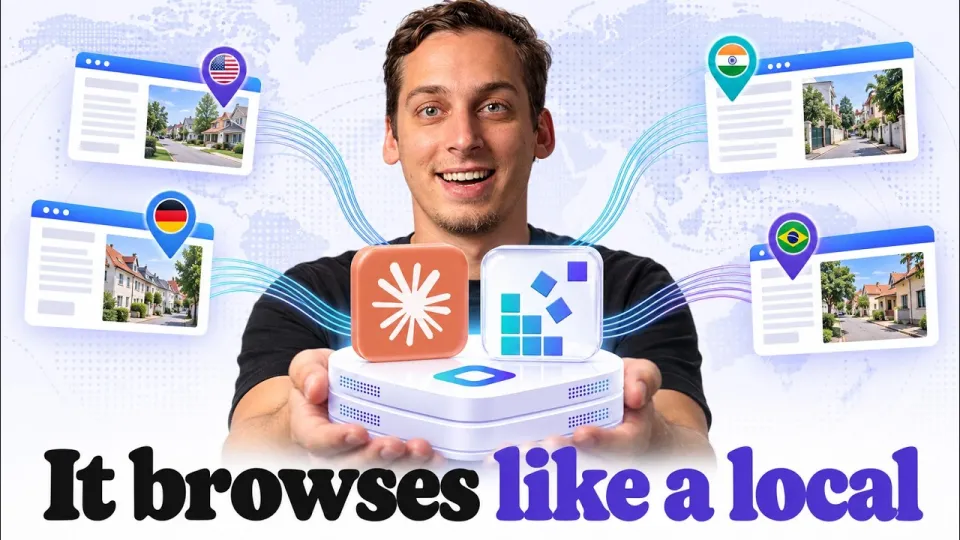
Video: This Claude Code Agent Uses Residential Proxies to Find Hidden Prices
Residential proxies are specialized proxy servers that route your internet requests through real residential IP addresses assigned by internet service providers (ISPs). Unlike traditional VPNs that use data center IPs, residential proxies appear as ordinary home users to websites, making them invaluable for accessing region-specific content and prices.
How Residential Proxies Work to Reveal Hidden Prices
Residential proxies mask your actual IP by routing traffic through a pool of residential addresses worldwide. This allows you to simulate browsing from different geographic locations without being flagged as a bot or proxy user. For example, when checking SaaS pricing or subscription services like Spotify or Canva, a residential proxy in India will show local prices instead of the US rates that might be displayed otherwise.
Each request sent through residential proxies can be assigned a fresh IP from a different home ISP, a technique known as rotating proxies. This rotation prevents detection and blocking by websites that monitor IP usage patterns, enabling continuous web scraping of pricing pages or geo-targeted content.
Comparing VPNs and Residential Proxies
VPNs typically route all your internet traffic through a single data center IP, which websites often flag as suspicious. Residential proxies differ by distributing each request through various residential IPs tied to real home users. This makes it harder for websites to detect scraping activities or proxy usage. Consequently, residential proxies offer better access to localized content and pricing than VPNs.
Using Residential Proxies for Web Scraping and Price Comparison
Residential proxies are especially useful for scraping pricing information across regions. By leveraging tools like DataImpulse's residential proxy network, users can automate requests to pricing pages in countries like the US, Germany, Brazil, and India. This enables the aggregation and comparison of prices for services such as Spotify Premium, Canva Pro, ChatGPT, and Netflix, which often have significant regional price differences.
The process generally involves:
- Selecting residential proxies located in target countries.
- Employing automation frameworks like Playwright to navigate websites.
- Using AI agents such as Claude Code to parse and consolidate pricing data.
- Comparing results to identify regional price variations or hidden discounts.
Benefits of Rotating Residential Proxies
Rotating proxies provide a new IP address for every connection or request, enhancing anonymity and reducing the risk of IP bans. This feature is crucial for large-scale web scraping projects where multiple requests are sent to the same website. It ensures sustained access to data and prevents the website from blocking your IP due to suspicious activity.
Regional Pricing Insights from Residential Proxy Scraping
Using residential proxies to gather pricing data across countries reveals how companies employ geo-targeting strategies. For instance, Spotify Premium may cost $12.99 per month in the US but only around $1.45 in India. Similarly, Canva Pro subscriptions and SaaS products vary widely in price depending on the user's location. These insights help businesses and consumers understand pricing strategies and make informed decisions.
Common Questions About Residential Proxies
Many users wonder about the best residential proxy providers, how to set up rotating proxies, or the difference between proxies and VPNs. Residential proxies provided by networks like DataImpulse are popular for their reliability and broad IP pool. Integrating them with AI agents such as Claude Code and automation tools like Playwright simplifies the scraping process.
Useful Links
- DataImpulse Residential Proxy Network for Registration and Bonus
- Claude Code AI Agent
- Playwright Automation Framework
- CreatorNTWRK Discord
- Skool Builderz Gym
Conclusion
Residential proxies provide a powerful way to access geo-targeted pricing and hidden offers by routing traffic through real home ISP connections. Their use of rotating IPs and residential addresses makes them superior to VPNs for web scraping and price comparison tasks. Tools like DataImpulse's proxy network combined with automation and AI agents such as Claude Code enable efficient, scalable data collection from multiple regions. This approach uncovers regional pricing strategies for SaaS and subscription services, offering valuable market insights. For more detailed explorations, the channel Lukas Margerie offers practical guides and demonstrations. To start leveraging residential proxies for your projects, visit DataImpulse's official site for registration and bonuses.
Source: This Claude Code Agent Uses Residential Proxies to Find Hidden Prices · Markdown version
Questions & answers
What is the main difference between a residential proxy and a VPN?
A residential proxy routes each request through a real home ISP IP, making it appear as a local user, while a VPN routes all traffic through a single data center IP, which is more easily detected and flagged by websites.
How do rotating residential proxies improve web scraping?
Rotating proxies assign a new residential IP address for every connection or request, reducing the risk of detection and IP blocking, thus enabling continuous and anonymous scraping.
Why do prices vary between countries on platforms like Spotify or Canva?
Companies use geo-targeting strategies to adjust prices based on regional market conditions, purchasing power, and competition, which residential proxies help reveal by simulating local access.
Can residential proxies be used for accessing content outside my region?
Yes, by routing traffic through residential IP addresses in different countries, residential proxies allow users to access region-locked content and pricing as if they were local users there.